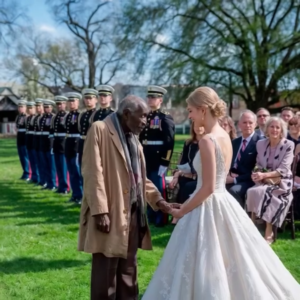
My name is Harold. I’m a former Marine, though these days the only battles I fight are with stiff knees, changing weather, and the slow creak of an old house settling at night.
The uniforms are long gone, folded into a cedar chest in the hallway closet. The medals are tucked away too, not out of shame, but because I’ve never liked polishing the past.
At seventy-three, life had settled into something quiet and predictable. Mornings meant coffee on the porch. Afternoons meant light yard work if my joints cooperated.
Evenings meant the six o’clock news and a book I’d read twice already. Predictable isn’t the same as empty. But it is quiet. That changed the morning the family across the street moved in.
It was early June, the kind of bright, forgiving day that makes even worn-down houses look hopeful. A moving truck lumbered into the driveway across from mine, followed by a blue SUV packed tight with boxes and blankets.
I watched from behind my living room curtains at first—old habits die hard—but by noon I’d stepped onto the porch, leaning on my cane, observing openly.
The father was the first one I really noticed. Mid-forties, maybe. Solid build. Clean haircut. Efficient movements. He directed the movers with quick gestures, not harsh, but precise.
The mother—Sarah, as I’d later learn—had a warmth about her. She carried smaller boxes, smiling at neighbors who slowed their cars to look.
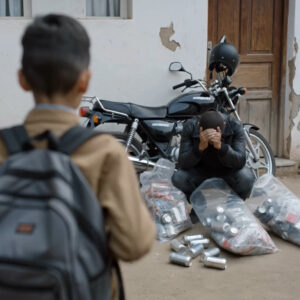
A teenage boy climbed out of the SUV and immediately shoved his hands into his pockets, shoulders curved inward as though trying to fold himself smaller.
A little girl, all bouncing energy and sunlight, twirled in the driveway until her mother gently told her not to get too close to the truck.
By late afternoon, they were on my porch with a cherry pie.
“I’m David,” the father said, extending his hand with a firm, practiced grip. “This is my wife, Sarah. Our kids are Leo and Mia.”
Mia waved enthusiastically. Leo gave a quick nod without meeting my eyes.
“Harold,” I replied. “Welcome to the neighborhood.”
It was neighborly, simple. We talked about trash pickup days and the best hardware store in town. David mentioned he worked in commercial construction management. Sarah said she’d taken a break from teaching while they relocated. Leo said nothing.
But I noticed his posture.
I’d seen that stance before. Not rebellion. Not laziness. It was the posture of someone carrying expectations heavier than he wanted to admit.
Over the next week, I learned their rhythms. David left early in pressed shirts and steel-toed boots. Sarah tended to the garden beds.
Mia rode her scooter in circles on the sidewalk. Leo stayed mostly inside, except for late afternoon, when David would call him out to the yard.
They threw a football.
At first, it looked like a normal father-son ritual. I sat on my porch, sipping iced tea, pretending not to watch too closely. But I heard the tone.
“Again,” David said sharply. “Keep your elbow up. Focus.”
Leo’s throws weren’t bad. Not professional-athlete material, but steady. Good arc. Decent spiral. Still, David dissected each one like it was a performance review.
When a pass went wide, he didn’t laugh it off. He corrected. When Leo hesitated, David checked his watch and sent him to throw against the brick wall.
“Keep your elbow up,” I called out casually one afternoon.
Both of them turned. Leo looked startled. David forced a polite smile.
Leo adjusted his form. The next throw was better.
I gave him a thumbs-up.
For a split second, his shoulders lifted. He looked like a kid again instead of a project under construction.
Less than a week later, things took a strange turn.
I was sitting in my darkened living room one night, television off, the only light coming from the streetlamp outside. Insomnia and I have an understanding: it visits, I make tea. As I passed the window, something flickered across the street.
A flashlight.
From Leo’s bedroom window.
Three short blinks. Three long. Three short.
S.O.S.
My pulse kicked harder than it had in years. Training never really leaves you. Patterns sink deep. That rhythm was carved into me before I was twenty.