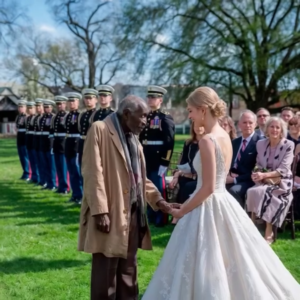
Simon’s smile was the kind that promised calm before a storm. He had always been a man of few words, often content to let his actions speak for him. Seeing him standing there, I felt a swell of relief. I knew my family had crossed a line they couldn’t uncross.
“Let’s all take a step back,” Simon said, his voice steady and composed. His eyes flicked to my father’s fist, and it was enough for Dad to loosen his grip on the key. “This isn’t how family treats each other.”
Mom looked indignant, as if Simon had just suggested something utterly preposterous. “We’re just trying to keep it in the family,” she insisted, her voice a blend of entitlement and exasperation.
Simon nodded slowly, “I understand the importance of family. But this house belongs to us. Not just in the legal sense, but because we worked for it, we dreamed of it, and now we’re living in it.”
My sister opened her mouth, probably to protest again about “equitable interest,” but Simon held up a hand. “Enough of the legal threats. We’ve been more than patient, more than fair, and I think it’s time we all remember what family really means.”
There was a beat of silence, the kind that feels like the world holding its breath. Then Simon turned to me, his eyes softening, “Let’s sit down and talk this through, like a family should.”
Reluctantly, they complied, following us to the sunlit living room. As we settled into the mismatched furniture — some of it thrifted, some pieces gifts from friends who understood what this place meant — I felt the tension ease just a fraction.
Simon laid it out plainly. He spoke of respect, boundaries, and the true meaning of family — not just blood, but love and support. His words were measured and calm, a balm on the raw edges of our emotions. He didn’t raise his voice, didn’t have to; the truth was powerful enough.
There was no immediate resolution — old habits and entitlement don’t fade with a single conversation. But it was a start. My parents and sister left that afternoon, not quite repentant, but subdued. The spare key was back in our hands, and their departure felt like the exhale we needed.
As the car engines faded down the driveway, Simon and I stood on the porch, our daughter nestled between us, her tiny hand clutching ours. The blue flag on the railing fluttered in the salty breeze, a reminder of why we had worked so hard for this dream.
“Do you think they’ll come around?” I asked quietly.
Simon shrugged, his arm slipping around my shoulder. “Maybe. Maybe not. But we know what’s right and what’s ours, and we’ll protect it.”
We stood there a little longer, watching the sun dip towards the horizon, casting the beach in a warm, golden glow. SeaGlass was more than a house; it was a testament to our dedication, our dreams, and our boundaries. It was a place where we could build memories, secure in the knowledge that it was truly ours.
And that, I realized, was the real victory.