I woke up that morning the same way I had every morning for six months.
Alone.
My hand reached automatically for Luke’s hoodie on the chair beside my bed. I pressed the fabric to my face and whispered his name like it might answer back. He had been seven years old when the accident took him—seven years of bedtime stories, skinned knees, mismatched socks, and laughter that once filled every corner of my home. One phone call ended all of it. A hospital room too white, too quiet. A doctor who didn’t need to finish the sentence.
My husband, Ryan, lasted a month after the funeral. Not because he didn’t love Luke, but because he couldn’t live beside my grief.
“I can’t do this anymore,” he said, suitcase already zipped. “You’re not the same person.”
He was right. I wasn’t. Divorce papers followed soon after. The last I heard, he’d moved away with someone younger—someone untouched by the weight of a child-shaped absence.
I learned how to disappear politely. I avoided places with kids. Declined family gatherings. Let phone calls go unanswered. A baby crying could bring me to my knees anywhere—grocery store, parking lot, even a commercial on TV. My body still believed there was a child who needed me, even though my arms were empty.
That Tuesday afternoon, I ran out of excuses not to go to the grocery store. The fridge was bare, and crackers weren’t a plan.
The store was loud, crowded, and overwhelming. I kept my head down, coat zipped high even though the heat was on. I was third in line when I noticed the woman ahead of me.
She couldn’t have been more than twenty-five. A janitor’s uniform hung loosely on her frame, name badge reading Allison. A toddler screamed from the cart. A preschooler clung to her leg. A baby squirmed in a carrier strapped to her chest. Her hands shook as she counted coins from her wallet, holding up a single can of formula like it might vanish.
The cashier waited, impassive.
The comments started behind me.
“Seriously? Three kids and she can’t afford formula?”
“How irresponsible can you be?”
“Count faster. Some of us have jobs.”
Allison dropped a coin. It rolled across the floor.
“I’m sorry,” she whispered. “I just need—”
“You need to get out of line if you can’t pay,” someone snapped.
Something inside me broke open.
“I’ll cover it,” I said.
The store went quiet. Allison turned, eyes wide and wet. I stepped forward and handed my card to the cashier. The transaction took seconds. The people behind me sighed and muttered, but I couldn’t look at them.
Allison clutched the formula to her chest. “Thank you,” she said, tears spilling. “My husband’s away, and things are just—”
“It’s okay,” I said. “Take care of your kids.”
She left quickly, like she was afraid the kindness might be revoked.
That night, I couldn’t stop thinking about her shaking hands, the cruelty in strangers’ voices, how close she’d been to breaking in public. I lay in bed holding Luke’s hoodie, wondering whether one can of formula could possibly matter.
The next morning, someone knocked on my door.
I wasn’t expecting anyone. I opened it in pajamas, coffee mug in hand, and froze.
A man in a military uniform stood on my porch. Tall, tired-eyed, steady.
“Harper?” he asked.
“Yes?”
“I’m Mason. Were you at the grocery store yesterday around three?”
My heart stuttered. “Yes. Is something wrong?”
He exhaled, shoulders dropping. “My wife told me what you did. I just got back from deployment this morning.”
I invited him in without thinking. We sat at my kitchen table while he turned his cap over in his hands.
“I didn’t know how bad things had gotten,” he said quietly. “Allison’s been working two jobs. Skipping meals so the kids could eat. She didn’t tell me because she didn’t want me worrying overseas.”
He swallowed. “She broke down yesterday. Then she told me about you.”
“I just paid for formula,” I said.
“You did more than that,” he replied. “You reminded her she wasn’t invisible.”
I asked how he found me. He explained he’d gone back to the store, checked cameras, talked to the cashier. Before leaving, he thanked me again. “For seeing my family when everyone else looked away.”
Two weeks later, Mason returned overseas. Before he left, he brought Allison and the kids over for dinner. It was loud and messy and full of spilled juice and laughter. For the first time since Luke died, I didn’t flinch when the baby cried.
Allison and I stayed in touch. I babysat. Brought groceries. Sat with her when loneliness crept in. Her oldest started calling me Aunt Harper.
One afternoon, folding laundry together, Allison said, “We need a place for moms like me. Somewhere we don’t have to be ashamed.”
We started small. A Facebook group. Library meetups. Then a donated room in an old community building. We called it Hope Circle. Formula donations. Clothing swaps. Childcare help. A place to breathe.
It grew faster than we imagined. Five women became twenty. Donations arrived. Volunteers stepped in. Slowly, the hole in my chest began to soften.
That’s when Ethan walked through the door. A counselor with a clipboard and a quiet smile. He listened more than he spoke. Never asked me to explain my past. One evening, he said, “Strength isn’t loud. It’s showing up even when it hurts.”
On a rainy afternoon, he took my hand and asked if he could walk the rest of life with me. I said yes through tears that finally felt like relief.
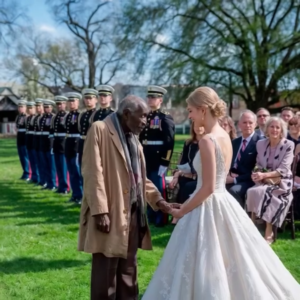
We married quietly. Allison and the kids were there. Mason watched on video from overseas. The room was full of women and children who had become family when I thought I’d lost mine forever.
Grief didn’t leave. It never does. But it made room—for connection, for love, for a life I never expected to find.
And it all began with one small act of kindness in a grocery store line.